Being a Race Director
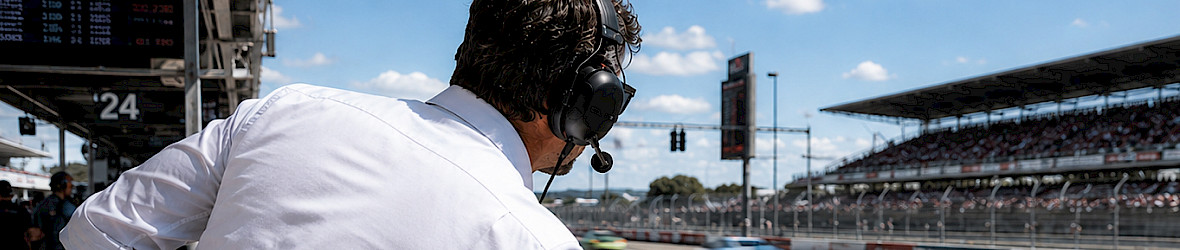
The role has its weight.
Running an event is not a formality, it's a commitment to every driver who signs up, to the grid you are building, and to the standards this community holds itself to. The moment you create an event, you take on a responsibility that extends far beyond setting race distances and choosing a track.
You are the reference point. When something is unclear, drivers look to you. When something goes wrong, drivers look to you. That is the role. Accept it fully, or do not take it on.
In most cases, you will also be on the grid yourself. You are simultaneously the authority running the event and a competitor inside it. That dual position shouldn't be a conflict, it is an opportunity to lead by example from the inside. But it demands a standard most drivers never have to meet: everything you ask of your grid, you must deliver yourself, visibly and without exception.
Be prepared.
Know your event. Know every regulation clause that applies to it. Know the track, its known collision points, its overtaking zones, its hazards. Know your entry list, who is new, who has a history of incidents, who may need extra guidance in the pre-race briefing.
Build your event structure before you open registration. Race distances, tyre requirements, fuel settings, penalty thresholds. These must be decided in advance, documented clearly, and published before a single driver enrolls. Drivers cannot prepare for an event that has not been defined. Changing the rules after registration opens is a failure of preparation, and it will cost you the trust of your grid.
Preparation is also about contingencies. What happens if a driver disconnects? What is your policy on standing starts versus rolling starts if the lobby fails? What constitutes a restartable incident? Think through the edge cases before they happen, because they will happen.
Brief the drivers.
The pre-race briefing is the most important communication you will have with your drivers before the race.
A strong briefing is short, specific, and actionable. It does not repeat the entire regulation back to drivers who have already agreed to it. It addresses the things that matter for this event, on this track, with this grid. It flags the corners that cause incidents. It reminds drivers of the specific rules in play: tyre strategy, fuel rules, penalty settings. It sets the tone for what you expect on track.
Deliver the briefing before the lobby opens. Drivers who arrive to a live lobby and miss the briefing are a Race Director problem, not a driver problem. Set the schedule clearly. Give drivers time to read, time to ask questions, and time to prepare. If a driver has a question in the briefing, answer it directly and completely and if that question reveals an ambiguity in your rules, address it for the whole grid, not just the driver who asked.
Close the briefing with clarity. Drivers should leave knowing exactly what is expected of them. Uncertainty before a race creates conflict during it.
Communicate clearly.
How you communicate defines how your grid sees you.
Be direct. Be consistent. Do not leave room for interpretation on matters that should be clear. When you issue an instruction, a decision, or a penalty, state it plainly: the decision, the reason, and if applicable, the regulation clause it is based on. You do not owe anyone a lengthy justification, but you do owe them a clear one.
Be available. Drivers should be able to reach you before and during the event. If a driver raises a concern, acknowledge it. You do not have to agree with it, but you must hear it. A Race Director who is unreachable or dismissive will lose their grid faster than any bad decision.
Be consistent across drivers. The same incident, the same penalty. Every time. The moment your decisions appear to favour or penalise anyone based on anything other than what happened on track, your authority is gone. Consistency is the foundation of everything.
Be the first to admit error.
You will make mistakes. You will miss an incident. You will issue a penalty and later realize you were wrong. You will misread a regulation, misapply a rule, or make a call under pressure that does not hold up to scrutiny.
When that happens, own it immediately.
Do not wait for someone else to point it out. Do not defend a wrong decision because reversing it feels uncomfortable. Do not let pride protect an error that is costing a driver a fair result. If you were wrong, say so, clearly, to the grid, without qualification. Correct what can be corrected. Learn from what cannot.
This also applies on track. When you are racing and you make a mistake - a misjudged braking point, a move that forced another driver wide, contact you caused - you are held to the same regulation you enforce. There is no exemption for the person running the event. If anything, the standard is higher. Admit the error, accept the consequence, and move on cleanly. The grid is watching how you handle it.
This is the highest standard of leadership. A Race Director who admits error and corrects it builds more trust than one who never makes mistakes. Because the grid knows that no one never makes mistakes. What they are watching for is whether you have the integrity to face yours.
Take the blame when others won't.
There will be moments when something goes wrong and no one steps forward. A confusion in the lobby. A miscommunication before the race. An incident on track that falls into a grey area no one anticipated. In those moments, it is easy to let the ambiguity sit, to avoid assigning fault, to let things pass.
Do not.
If the situation was caused by an unclear rule, that is your rule. Own it. If a driver made a mistake because the briefing did not cover a scenario it should have covered, that is your briefing. Own it. If the format created an outcome that felt unfair, even if it was technically correct, acknowledge it.
And when you are involved in an on-track incident as a driver, even a disputed one, even one where fault is shared, lean toward accountability rather than away from it. You cannot be the person who penalises others for the same conduct you deflect from yourself. That contradiction will hollow out your authority faster than anything else. Step forward, take your share, and let your grid see what it looks like to do so without hesitation.
Blaming drivers for failing to navigate your event's shortcomings is a reversal of responsibility. You set the stage. What happens on it reflects back on you. Hold yourself to a higher standard than you hold your drivers.
The standard you set is the standard you get.
Drivers will treat your event the way you treat it. If you are prepared, they will prepare. If you communicate clearly, they will communicate clearly. If you are fair, they will trust the process. If you are present, engaged, and invested in making the racing as good as it can be, that energy carries through to the grid.
You are not just running an event. You are shaping the experience of every driver who participates in it. That is the role. Do it with the discipline and integrity it demands.